
Why Is Email Automation Still the #1 Strategy for Lead Generation in 2025?
Email automation isn’t just about sending emails—it’s about building relationships. With the right funnel, you can capture leads, nurture them with value, and convert them into loyal customers. Discover how automated campaigns boost conversions and keep your business growing.
AUTOMATION
8/25/202510 min read


Email Automation Funnels: Your Secret Weapon for Lead Generation
Running a small business in today’s digital world can feel like juggling too many balls—content creation, social media, SEO, ad campaigns, and customer follow-ups. Small business owners often get stuck trying to manage everything manually, especially when it comes to nurturing leads. That’s where email automation funnels come into play. Think of them as your digital assistant, guiding potential customers from initial interest to loyal clients—without burning midnight oil.
At House of Digital Solutions, we believe automation isn’t just a tool; it’s a game-changer. In this post, you’ll discover how properly structured email funnels elevate your brand’s visibility, keep leads engaged, and boost conversions—backed by impressive statistics. Ready? Let’s dive in.
1. Why Email Automation Matters More Than Ever ?
Email marketing continues to outshine most digital channels when it comes to ROI. According to HubSpot, B2C brands average a 2.8% conversion rate, while B2B converts at roughly 2.4% HubSpot. But the real magic lies in automation—automated emails deliver a staggering 2,361% better conversion rate than one-off campaigns Omnisend.
This means email automation doesn’t just add value—it multiplies your results. Whether it’s sending welcome sequences, abandoned cart reminders, or personalized offers, automation ensures you’re nurturing leads at the right time, with the right message. It’s career-defining for businesses aiming to sustain growth without overwhelming their team.
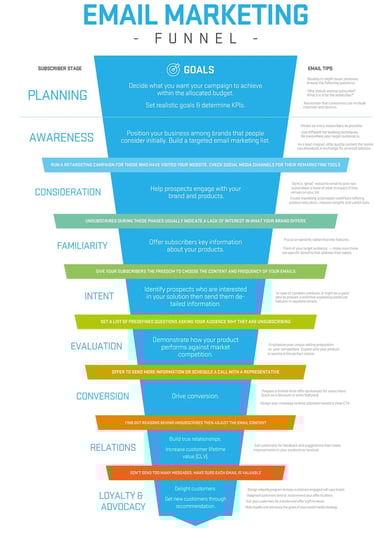
The Four Core Stages of an Email Automation Funnel
1. Lead Generation:
Capturing the First Spark of
Interest
The journey begins with lead generation, which is all about
sparking curiosity and getting potential customers into your
ecosystem. Think of this as the digital equivalent of opening
your shop’s doors. Without this step, there’s no funnel to fill.
In practice, businesses capture leads by offering value
upfront—commonly through opt-ins, lead magnets, gated
content, or targeted ads. A lead magnet could be as simple
as a free eBook, a checklist, or a webinar that solves a
problem your audience is actively seeking answers to.
For instance, a digital marketing agency might offer a free
“5-Day Social Media Content Calendar” in exchange for an
email address.
According to Demand Metric, 60% of people are willing to share their email address to receive valuable content. That’s a clear sign that customers don’t mind the exchange if the benefit is obvious. Once you’ve got their email, you’re no longer at the mercy of shifting social media algorithms—you own a direct line of communication.
When integrated with smart email automation tools, leads are automatically added to your funnel and segmented based on their interests or source of entry. This segmentation ensures that the next stage (nurturing) feels personalized, which drastically improves engagement rates.
At House of Digital Solutions, we help businesses craft conversion-focused lead generation campaigns, from attractive landing pages to optimized ad funnels, ensuring that the first spark of interest doesn’t fade away but flows naturally into nurturing.
2. Lead Nurturing: Building Trust Through Value
Once you’ve captured a lead, the real work begins: nurturing the relationship. This stage is about consistently delivering value, educating your audience, and proving that your brand understands their needs.
Lead nurturing usually happens through drip email campaigns—a sequence of automated messages sent over time. Instead of bombarding prospects with sales pitches, these emails should offer helpful insights, tutorials, or case studies that align with the customer’s pain points. For example, if someone signed up for your “Social Media Calendar,” your next emails might include tips on writing engaging captions, insights on growing followers, or a success story from a client who boosted engagement with similar strategies.
Statistics prove the importance of nurturing: companies that excel at lead nurturing generate 50% more sales-ready leads at a 33% lower cost (Forrester Research). That’s because people rarely buy the first time they interact with a brand—they need reassurance, proof, and trust before committing.
Personalization also plays a massive role here. Emails that use the recipient’s name or tailor content to their interests achieve 26% higher open rates. Imagine the difference between receiving an email that says, “Hi there, check out our services” versus “Hi Sarah, here’s how small businesses like yours doubled engagement in 30 days.”
At HODS, we design strategic nurturing campaigns that position your brand as the go-to expert. Instead of forcing a sale, we focus on making your audience feel informed and confident—setting the stage for the next step: conversion.
3. Lead Conversion: Turning Interest into Action
This is where your funnel pays off. Lead conversion is all about turning curiosity into tangible action—whether that’s signing up for a service, making a purchase, or booking a demo.
The key here is timing and relevance. With email automation, you can set up behavior-based triggers that deliver the right offer at the right time. For example:
Abandoned Cart Reminder: “Hey, you left this behind—complete your order today and enjoy 10% off.”
Event Follow-Up: “Thanks for attending our webinar! Here’s a special bonus offer just for participants.”
Seasonal Offers: “Get started today with our summer discount before it expires.”
Numbers back this up—triggered emails drive 624% higher conversion responses than general campaigns (Experian). This shows how personalization and timing can massively influence buying decisions.
Clear and persuasive call-to-actions (CTAs) are critical here. Your CTA should be direct (“Book Your Free Consultation”) and urgent enough to prompt immediate action. Adding elements of scarcity (limited time offers) or social proof (testimonials, case studies) further boosts conversions.
At House of Digital Solutions, we focus on funnel optimization, ensuring every stage guides users smoothly toward conversion. We don’t just send random offers—we track customer behavior and align messages that feel natural, making the buying decision feel like the obvious next step.
4. Customer Retention: Turning Buyers into Lifelong Fans
Many businesses stop after conversion, but the real growth lies in customer retention. Acquiring a new customer costs 5x more than retaining an existing one (Harvard Business Review). That’s why this stage is so critical.
Retention is about providing ongoing value after the first purchase. This could include:
Follow-Up Emails: Thanking them for their order and sharing helpful product guides.
Review Requests: Encouraging feedback to build credibility.
Loyalty Programs: Exclusive discounts or points for repeat purchases.
Upsell and Cross-Sell Offers: Recommending complementary services or upgrades.
One of the simplest yet most effective strategies is sending personalized “thank you” emails. Research shows that thank-you emails generate 42% more open rates than average campaigns, because they feel genuine and human. Adding exclusive offers for repeat customers keeps them engaged while building loyalty.
Another crucial element is community building. Sharing user-generated content, highlighting customer success stories, or creating exclusive subscriber-only groups strengthens the emotional bond between your brand and customers.
At HODS, we design customer loyalty email flows that go beyond retention—they create advocates who spread the word, leave reviews, and refer new clients. When retention strategies are done right, your funnel becomes a cycle, where customers continuously engage and fuel business growth.
3. Step-by-Step: Building Your Email Automation Funnel
Step 1: Capture Leads with Value
The funnel starts long before anyone reads an email—it starts with a good reason for someone to share their address. That reason is your lead magnet. Think: a 1-page checklist, a short “how-to” guide, a mini course, a calculator, or an exclusive discount—anything that solves a small, real problem for your audience right now. The key is specificity. “Free digital tips” is vague; “7-day Instagram Reels calendar for restaurants in Karachi” is irresistible to the right person. Place your offer where intent is high: a simple form on your homepage, a pop-up on relevant blog posts, an exit-intent prompt on product pages, and a short opt-in on your landing pages. Drive traffic with targeted social posts and low-budget ads that speak directly to a pain point. Keep your form short (name + email), clearly state the benefit (“Get the template in your inbox in 60 seconds”), and show social proof (logos, review count, or a quick testimonial). If you serve multiple segments (e.g., B2B vs. B2C), create different lead magnets and tag subscribers by source so you can personalize later. Finally, confirm the opt-in with a friendly “You’re in—here’s what to expect” page, and deliver the asset immediately. The moment someone trades their attention for your value, your relationship begins—so make the first impression fast, helpful, and delightfully simple.
Step 2: Nurture with Educational Drip Campaigns
Once a subscriber opts in, don’t rush the sale—earn it. A tight, 5–7 email drip sequence turns cold leads into warm conversations by teaching, not pitching. Start with a welcome email that delivers the promised asset and sets expectations (“You’ll get 1 practical tip every Tuesday”). Follow with short, single-topic notes: a quick win, a myth debunked, a 60-second tutorial, or a checklist they can act on immediately. Thread in micro-stories (a client challenge and how you solved it) to build credibility without sounding salesy. Use simple personalization—name, industry, and the lead magnet they downloaded—and segment the content accordingly (e.g., restaurant owners get menu-engineering tips; ecommerce founders get checkout optimization ideas). Keep emails scannable: a strong subject line, a 1–2 sentence hook, 1 big idea, 1 CTA (“Read the full guide,” “Try this template,” “Reply with your main challenge”). Measure opens, clicks, and replies, and adjust frequency if engagement dips. The goal of nurturing is momentum, not pressure. When a subscriber consistently experiences value, your later offer feels like the obvious next step. Pro tip: add a “hand raiser” email mid-sequence (“Want a free 15-minute audit?”). It surfaces hot leads without a hard sell and tells you who’s ready for a conversation.
Step 3: Convert with Smart Triggers
This is where automation earns its keep. Behavior-based triggers send the right message at the right moment—no guesswork, no manual chasing. Examples that consistently drive revenue:
Abandoned cart/email capture: “You left this behind—complete your order in 24 hours for free shipping.”
Browse abandonment: “Still comparing? Here’s a 2-minute guide to choosing the right plan.”
Welcome offer: “Thanks for joining—your 10% code is inside (48 hours only).”
Re-engagement: “Haven’t seen you in a while—here’s what you missed + a little nudge.”
Why triggers work: they react to intent. Someone who viewed pricing needs a confidence boost (FAQs, case study, or quick demo). Someone who downloaded a template might be ready for a done-for-you version. Keep each triggered email laser-focused on one friction point and one action (“Book a discovery call,” “Claim your code,” “See the 3-minute demo”). Add urgency ethically (limited-time bonuses, limited spots), include social proof (short testimonial or rating), and reduce fear (money-back, clear next step). The numbers back it up—automated emails see dramatically higher performance than regular blasts, including 2,361% better conversion rates in large-scale benchmarks. Omnisend
Step 4: Retain and Upsell
Winning a customer is great—keeping them is where profit compounds. Start with a post-purchase sequence that does three things: 1) reassures (“Order received—here’s what happens next”), 2) helps (“How to get the most out of your purchase” guide, short video, or setup checklist), and 3) invites (“Need help? Reply to this email and a real human will answer”). A few days later, ask for a review with a one-click link and a simple prompt. Follow with a value-plus offer: accessories, upgrades, a maintenance plan, or a members-only perk. For services, think quarterly check-ins, new feature highlights, or a personalized audit. Segment by behavior: heavy users get advanced tips and premium offers; idle users get “get back on track” nudges and short wins. Celebrate milestones (anniversary emails, usage achievements) and add loyalty incentives (points, referral rewards, early access). Keep the tone human and appreciative—“Thanks for trusting us” beats “Open this promotion.” Over time, retention flows create fans who buy again, refer friends, and amplify your brand. The payoff: lower acquisition pressure, higher lifetime value, and steadier revenue—because your funnel didn’t stop at “paid,” it matured into a relationship.
4. ROI That Makes You Smile
What’s the return on all this effort? Brace yourself:
ROI averages $36–$40 for every $1 spent on email marketing Mayple.
Other sources report an even more stunning ROI of 4,200%—that’s $42 returned for every dollar invested Sixth City Marketing.
These figures make email funneling one of the most cost-effective marketing strategies—especially for small businesses in Pakistan or beyond.
5. Best Practices for Email Automation Success
Building an email funnel is one thing—making it actually work is another. The difference between a struggling campaign and a high-converting one often comes down to following best practices. Here’s what separates a winning email automation funnel from the rest:
1. Personalize & Segment
Generic emails get ignored. Today’s customers expect content that feels relevant to them. Personalization isn’t just adding a first name—it’s about delivering value that fits their needs.
Why it matters: Emails with personalized subject lines see 26% higher open rates (Nonprofit Tech for Good).
Segmentation takes this further. Instead of blasting one email to everyone, divide your list by demographics, behaviors, or purchase history.
Example: A clothing store could send “winter deals” to customers in colder regions while offering “summer styles” to those in warmer cities.
When combined, segmentation and personalization can lead to 202% better conversions.
2. Design for Mobile First
Your beautifully written email won’t matter if half your audience deletes it on sight. Studies show that 50% of users delete emails that don’t display properly on their phones (OptinMonster).
Keep subject lines short (35–45 characters) so they don’t get cut off.
Use single-column layouts, larger fonts, and tappable buttons.
Test your emails on both iOS and Android before sending.
Remember: most leads check emails during quick breaks—commutes, coffee runs, or lunch hours. If they can’t read it easily, they won’t bother.
3. Track & Measure What Matters
Guesswork doesn’t grow businesses—data does. The average open rate across industries is ~24% (InboxAlly), while conversion rates hover around 2–5% (Unbounce, Mayple).
Monitor open rates to see if your subject lines are doing their job.
Track click-through rates (CTR) to measure engagement.
Measure conversions to confirm your funnel is actually driving sales or signups.
Set benchmarks for your industry and work towards beating them. Numbers don’t lie, and they’ll tell you exactly where you need to adjust.
4. Test, Optimize & Repeat
Even the best marketers don’t get it right the first time. A/B testing is your secret weapon.
Test subject lines (questions vs. statements, emojis vs. plain text).
Test send times (morning vs. evening, weekday vs. weekend).
Test email content (long storytelling vs. short punchy messages).
Over time, these small optimizations stack up into huge performance improvements. What works for one brand may flop for another—your audience will show you what they prefer if you experiment consistently.
6. Why HODS is Your Best Support in Automation
At House of Digital Solutions, we don’t just set up automation campaigns—we tailor them to your unique needs:
We craft compelling lead magnets and landing pages.
We design drip sequences that reflect your brand’s voice.
We monitor performance using conversion data and metrics, improving results continuously.
Check out our Digital Marketing Services for full details on our automation and email solutions.


Custom Solutions
Tailored strategies for your digital & business success journey.
Policies
Future
email: info@hods.io
Call : +92 318 249 5037
© 2025. All rights reserved by House of Digital Solutions
+44 759 968 2726
IMPACT